


Team building trail game: what makes real collaboration effective

Many corporate team building events fail for a simple reason: they are designed to entertain, not to transform.
An icebreaker might generate laughter. A group activity might create a temporary sense of unity. But once employees return to their desks, nothing has changed.
Effective team building is not about fun. It is about function. Team building trail game
The difference between activity and experience TEAM BUILDING TRAIL GAME

An activity occupies time.An experience reshapes interaction.
For team development to be meaningful, it must contain three core elements:
Shared objective
Structured uncertainty
Collective accountability
Without these, events become recreational breaks rather than developmental tools.
This distinction explains why adventure-based team formats are growing in popularity across Europe and North America.
The power of shared challenge
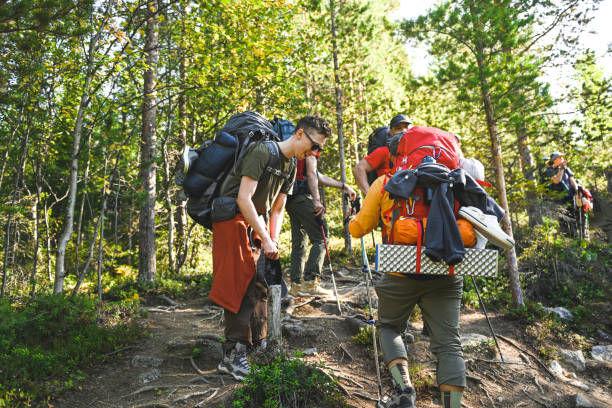
Human cooperation intensifies when groups face manageable difficulty together.
In controlled outdoor environments, mild time pressure and decision constraints activate natural collaboration patterns. Participants must listen, prioritize, and adapt quickly.
When designed well, these environments remove artificial corporate roles. Titles become irrelevant. What matters is contribution.
In the TrailGame structure developed within the Monferrato landscape, teams advance along a real trail while solving dynamic challenges. Strategic cards introduce tactical options. Special trials demand creativity and coordination. The territory itself becomes part of the equation.
No one can succeed alone.
And that is precisely the point.
Psychological safety through action
Contrary to popular belief, psychological safety does not emerge from passive conversation. It emerges from shared action.
When teams navigate terrain together, make collective decisions, and solve layered challenges, they experience micro-successes and recover from small setbacks as a unit.
This builds trust far more effectively than discussion alone.
Outdoor experiential formats accelerate this process because movement reduces social tension. People speak more naturally while walking. Ideas surface more spontaneously. Hierarchies flatten.
The result is authentic collaboration, not forced participation.
Gamification with purpose
Gamification has become a buzzword in corporate learning. But poorly designed gamification feels childish.
Effective systems integrate game mechanics without compromising seriousness.
TrailGame, for example, uses structured progression, timed phases, and tactical elements not to entertain, but to stimulate strategic thinking. The presence of dynamic components introduces variability — forcing teams to reassess plans and communicate clearly.
This mirrors real corporate environments more accurately than controlled simulations.
Why companies are shifting outdoors
Indoor workshops rely heavily on verbal interaction. But collaboration in modern companies requires more than discussion. It requires synchronized action.
Outdoor formats combine cognitive and physical engagement. Teams must interpret information while moving. They must make decisions without complete data. They must adapt in real time.
These conditions reflect real leadership environments more faithfully than scripted exercises.
Beyond the event
The real value of experiential team building appears after the experience.
Participants return with shared reference points. Managers gain insight into behavioral patterns. Teams have tangible examples of collaboration under constraint.
Experiences embedded in real territory — rather than abstract conference rooms — tend to be remembered longer and discussed more often.
This is why organizations are investing in structured, territory-based formats instead of traditional corporate retreats.
Because collaboration cannot be declared.
It must be practiced.
And sometimes, the most effective way to practice it is not around a table — but along a trail.


Comments